Leadership & développement personnel
Keep believing
Grief and ambition often share the same season. This piece looks at belief as a daily discipline rather than a mood, and at how leaders keep a dream credible when the evidence is still thin.
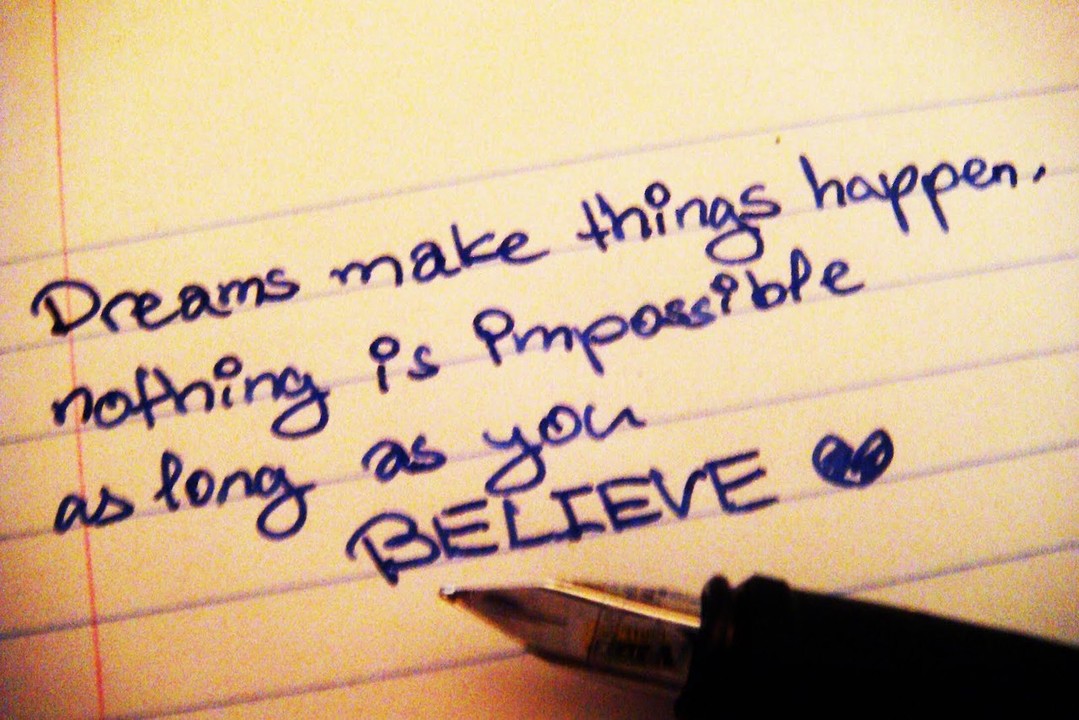
"No matter how your heart is grieving, if you keep on believing, the dreams that you wish will come true." — Walt Disney. I have never read that line as sentimentality. I read it as a statement about sequence: grief first, belief second, outcome last. Most of the work happens in the middle, in the long stretch where nothing has arrived yet and the heart is still heavy.
When Grief and Ambition Share the Same Room
We like to imagine that ambition is fuelled by momentum. In my experience it is more often carried through seasons of loss. A project stops. A role does not come. Someone you counted on leaves. A family matter takes the energy you had reserved for your plan. The ambition does not disappear during those months; it simply has to live alongside something painful. Learning to hold both at once, without pretending the grief is not there and without letting it write the ending, is one of the least discussed skills of a working life. Nobody trains you for it, and everybody eventually needs it.
Belief Is a Discipline, Not a Mood
Belief that depends on feeling good is fragile, because feelings are honest reporters of the last twenty-four hours and nothing more. What I have learned to practise instead is belief as a repeated act: showing up to the same task, keeping the same standard, protecting the same long-term direction on a day when I feel none of it. On difficult programmes, the teams that recover are rarely the most optimistic ones. They are the ones who keep the rhythm, the meeting, the update, the honest number, until conditions change. Discipline buys time, and time is usually what a dream actually needs.
What Struggling Projects Taught Me
I have worked on projects that looked, at some point, as if they would not land. The instinct in those moments is to redesign everything at once. It is almost always the wrong instinct. What helps is narrowing to the few things that genuinely move the outcome, being brutally clear about the current position, and refusing to trade truth for comfort in reporting. Belief and realism are not opposites. In fact, the strongest form of belief I know is the one that can absorb bad news without collapsing, because it is anchored in something more durable than this week's status.
Separating Hope From Wishful Thinking
Wishful thinking asks the world to change on its own. Hope commits to action while accepting that the result is not fully in your hands. The difference is testable. Hope produces a next step, a decision, a conversation, a revised plan. Wishful thinking produces waiting. When I catch myself in the second mode, the question I ask is simple: what would I do this week if I truly believed this was possible? Then I do that thing, even at a small scale. Belief that never touches the calendar is not belief; it is decoration.
The Quiet Work of Keeping a Dream Alive
Dreams are rarely killed in one blow. They erode through unreturned energy, through years of putting them last, through the reasonable decision to postpone them one more time. So the work is quiet and unglamorous: keeping a note of what you actually want, revisiting it when circumstances shift, telling one or two trustworthy people so it exists outside your own head, and protecting a small amount of time for it even in heavy periods. I have found that a dream survives on evidence of attention. Give it none, and it fades. Give it a little, consistently, and it stays available.
Teaching Belief Inside a Team
You cannot instruct people to believe. You can, however, build the conditions where belief is reasonable. That means giving the team a clear picture of where they stand, celebrating the progress that is real, removing the obstacles you are actually able to remove, and being the person who does not panic first. Faith in a group setting is mostly transmitted through steadiness. When people see that the leader tells the truth and still moves forward, they conclude that moving forward is defensible. That conclusion is worth more than any motivational speech.
What I Hold Onto
I have carried my own grief through professional seasons, and I have watched people I admire do the same with far less support than they deserved. What I hold onto is this: the heart is allowed to be heavy, and the direction is still allowed to be forward. Those two facts do not cancel each other. Disney's line survives because it refuses the false choice between honesty about pain and commitment to a future. Keep telling the truth about where you are. Keep believing about where you are going. Then do the next real thing in front of you, and let the accumulation of those days argue on your behalf.