能源转型
每个人都在谈论人工智能用了多少电。几乎没有人谈论它需要多少水
到 2027 年,在已经面临缺水压力的地区,将额外抽取 4.2 至 66 亿立方米。世界上60%的最佳未开发太阳能资源都在非洲。


A single AI prompt of about 100 words consumes roughly half a liter of water, according to researchers at UC Riverside. Now think about how many of those conversations happen every second of every day, in dozens of languages, across hundreds of millions of users.
The reason is simple and physical. The chips that run AI generate enormous heat, and the cheapest way to carry that heat away has long been water. Cooling towers evaporate it by the millions of liters. The water does not come back.
Now scale that to the build-out underway. The AI boom could drive an extra 4.2 to 6.6 billion cubic meters of water withdrawal by 2027. That is more than the annual water use of some entire countries.
Here is what makes it heavier: these facilities are often built exactly where water is already scarce, in dry regions where land is cheap and the sun is reliable, competing with farms and households for the same supply. The same map that shows water stress tends to overlap with the map that shows energy poverty. So the communities with the least to spare are increasingly being asked to host the thirstiest infrastructure of the digital age.
And this is happening while 685 million people still have no electricity at all, and billions more lack reliable access to clean water.
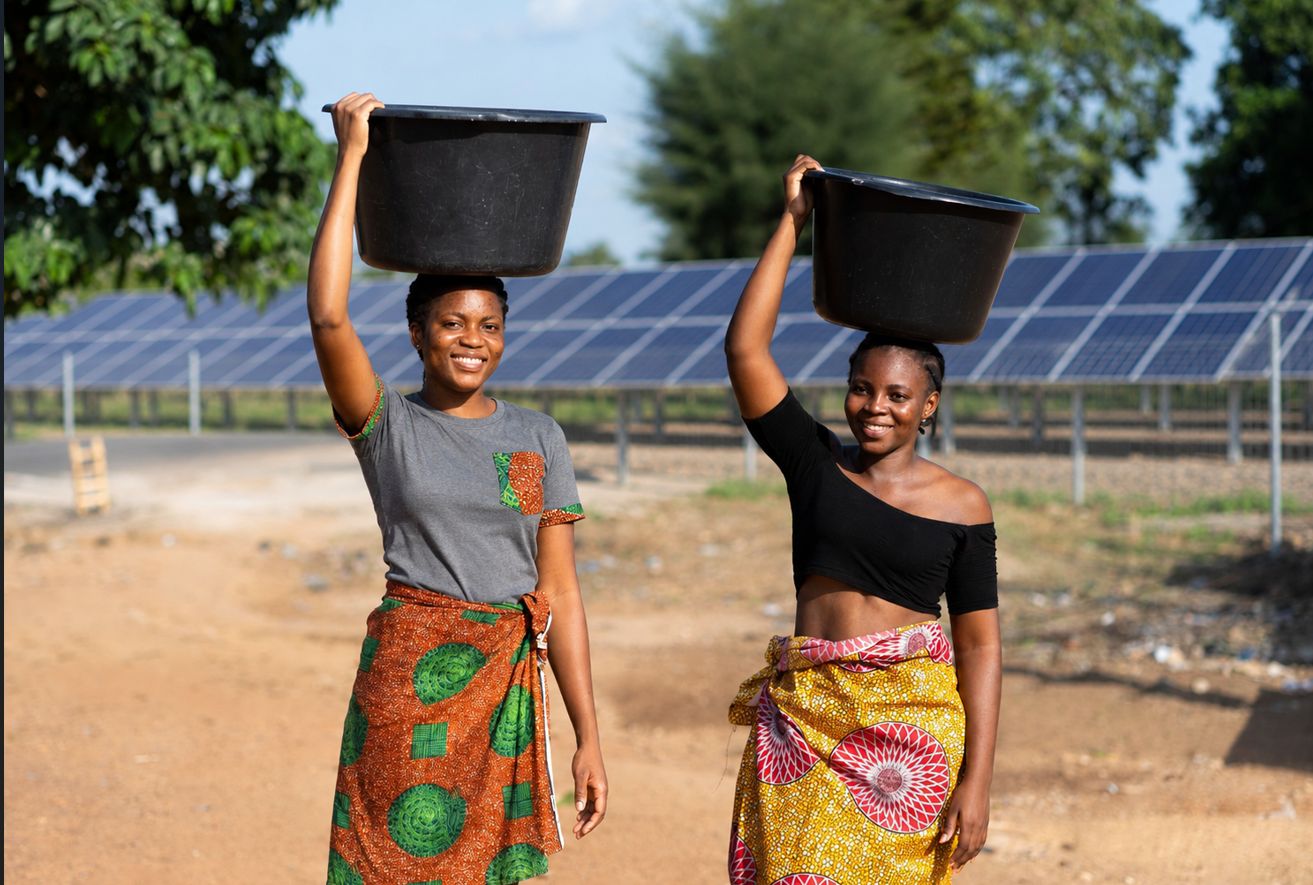
There is a way out of this, and it has been sitting in plain sight, in the sunniest places on earth. Africa holds roughly 60% of the world's best solar resources, according to the IEA. It also holds about 1% of the world's installed solar capacity. A continent of 1.2 billion people runs on roughly a fifth of the solar capacity of Germany, a country not exactly famous for its sunshine. The resource is there. The investment has not been.
The IEA estimates Africa needs around $190 billion a year through 2030 to build out its energy system, with about two-thirds of that going to clean power. The cooling water, the cheap electricity, the open land, the steady sun: they are abundant precisely where capital has been thinnest. The same conditions that make a region attractive for a data center could make it a net exporter of clean energy, and a place where local people are powered first, not last.
We are building the core infrastructure of the next century right now, at extraordinary speed and scale. We can build it to concentrate water, power, and opportunity in a handful of places, or we can build it so the regions that have been overlooked for a century finally get to power themselves and the world at the same time.