Education and human capital
Rethinking our education system: training capable people, not identical profiles
School must transmit solid fundamentals while revealing talents, critical thinking, cooperation and the ability to act in a world transformed by AI.
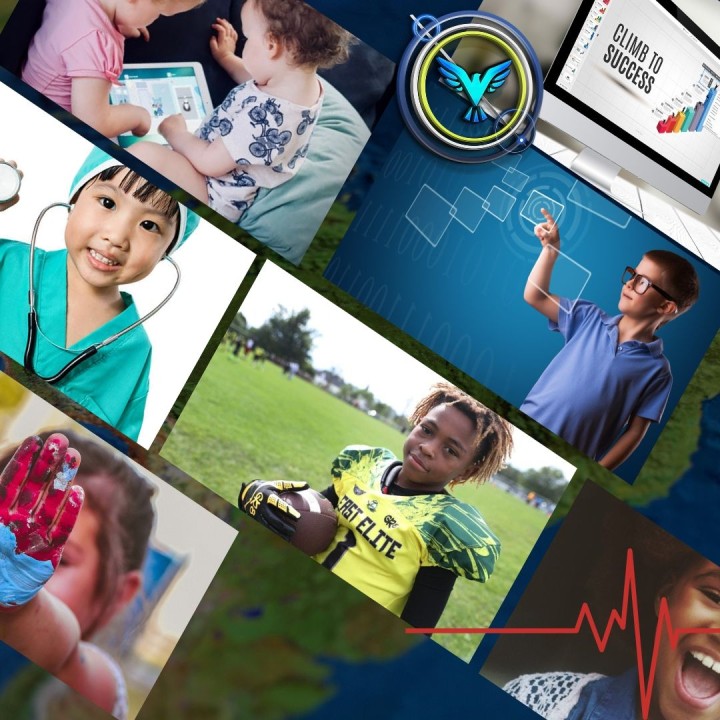
A few years ago, a story caught my attention. A child was regularly taken back to school because he spent a lot of time drawing. His parents could have asked him to give up this activity in order to concentrate exclusively on matters considered serious. They chose another path: recognizing an aptitude, supporting it and allowing it to progress.
This anecdote does not mean that every childhood passion will become a profession. It reveals a deeper question: does our educational system know how to observe what manifests itself in the child, or does it first seek to bring it into a uniform model?
In 2026, this question is even more urgent. Artificial intelligence is transforming tasks, professions and the conditions of access to knowledge. Memorizing remains useful, but memorizing what a machine can instantly reproduce can no longer constitute the essential part of an educational project. The challenge is to train people capable of understanding, discerning, cooperating, creating and taking responsibility for their decisions.
The school must not oppose fundamentals and singularity
Criticizing standardization does not mean renouncing the requirement. Every child needs the fundamentals: reading, writing, reasoning, counting, understanding the scientific world, mastering several forms of expression and learning to live with others.
The problem appears when these fundamentals become an instrument of permanent classification rather than a basis of emancipation. A grade can measure one-time performance. It does not say everything about potential, creativity, perseverance, relational intelligence or the ability to solve a concrete problem.
A successful education system should therefore pursue two objectives at the same time. Guarantee a robust common base and create spaces where particular skills can be detected, exercised and linked to real possibilities.
The child who draws, cooks, dismantles objects, organizes others, tells stories or intuitively understands emotions is not outside of learning. Perhaps he shows us a gateway to it.
Moving from the right answer to the right reasoning
School sometimes conveys the idea that there is always one right answer and that a mistake constitutes a personal failure. This logic can be reassuring because it simplifies the evaluation. She prepares poorly for complex situations.
In a project, an organization or a company, several solutions may be technically possible. We must compare their costs, their risks, their human effects, their sustainability and their long-term consequences. The skill is therefore not just about finding an answer. It consists of formulating the problem, explaining the hypotheses, producing evidence, listening to objections and deciding responsibly.
The error should also change status. It should neither be trivialized nor become a condemnation. It is information. When a student understands why his reasoning was unsuccessful, he develops an essential ability: learning from the gap between intention and result.
This culture is particularly important in the face of artificial intelligence. A tool can produce a fluent and false response. The student must know how to check, ask for sources, spot an inconsistency and distinguish rhetorical assurance and validity.
Learn to cooperate before entering the world of work
For a long time, academic success was represented as an individual competition: everyone on their copy, everyone for their place. Personal effort remains essential. But our biggest challenges are collective.
Energy transition, health, cybersecurity, infrastructure, climate change or social cohesion require people capable of working across disciplines, cultures and institutions. Schools must therefore teach cooperation as a skill, not as a peripheral activity.
This requires team projects with clear roles, shared objectives and an evaluation that distinguishes individual contribution from collective success. The top of the class shouldn't just be the one who goes the fastest. He could also be the one who helps the group progress without taking the place of others.
Cooperation teaches listening, constructive disagreement, responsibility and trust. These are professional skills, but also civic skills.
Redefining the role of the teacher
The teacher no longer needs to be presented as the sole holder of knowledge. Its role becomes more demanding: organize learning, establish a framework, help distinguish the true from the plausible, support the effort and create the conditions for progressive autonomy.
I myself experienced a situation where the answer key to a mathematics exercise contained an error. The point was not to challenge authority for the sake of it. It was to show each step of the reasoning. A mature school must be able to say: “Let’s check together. » The authority gains credibility when it accepts the evidence.
This means supporting teachers more. We cannot ask them to individualize pathways, integrate digital technology, manage social fragilities and develop new teaching methods without training, resources and coordination time.
Skills to be included in the 2026 base
Several priorities should now complement fundamental learning.
1. Mastery of digital technology and AI
It's not just about using apps. Students need to understand data, algorithms, bias, privacy, cybersecurity, and the limits of automation.
2. Critical thinking and media literacy
Knowing how to identify a source, verify a statement, understand a graph and resist manipulation has become a condition of citizenship.
3. Emotional intelligence
Naming an emotion, managing a conflict, asking for help and understanding the point of view of others strengthen learning and mental health.
4. Financial and entrepreneurial culture
Budget, savings, risk, value, cost, contract and business creation should be approached progressively and concretely.
5. Ecological and energy issues
Children must understand the systems on which their lives depend: water, energy, food, mobility, biodiversity and infrastructure.
6. Languages and communication
A skill considered secondary can become decisive later. English, local languages, speaking, clear writing and, where possible, basic sign language broaden access and cooperation.
Organize an ecosystem around the child
School cannot carry out this transformation alone. Families, businesses, associations, universities, public institutions and cultural actors must contribute.
Companies can offer real-world problems, tours, internships and mentoring. Associations can provide complementary approaches. Families can share their observations about the child’s abilities. Public authorities must guarantee equitable access, because personalization must not become a privilege reserved for those who can pay for it.
Direction should be an ongoing process of exploration, not a sudden decision based on a few notes. A student must be able to try, make mistakes, discover an area and revise their project.
Training for freedom and contribution
Success does not come from dropping out of school. It goes through a school that helps everyone transform potential into skill, skill into contribution and contribution into autonomy.
We need engineers who understand humans, artists who master economic tools, entrepreneurs aware of their social responsibility, teachers capable of using AI without delegating judgment to it and citizens who know how to cooperate with different people.
Rethinking education is therefore not about adding one more subject to an already saturated program. This is to clarify its purpose.
Do we want to produce identical profiles capable of passing an exam, or train strong, curious and responsible people, capable of learning throughout their lives?
The world is changing quickly. Our response cannot be to accelerate the old model. It must be to see each child better, to demand the best from them and to give them the means to build a useful place in society.