Organizational resilience
The world after Covid-19: resilience is now a design requirement
The pandemic did more than interrupt activity. It exposed how efficiency without resilience can turn a local shock into a global operational crisis.
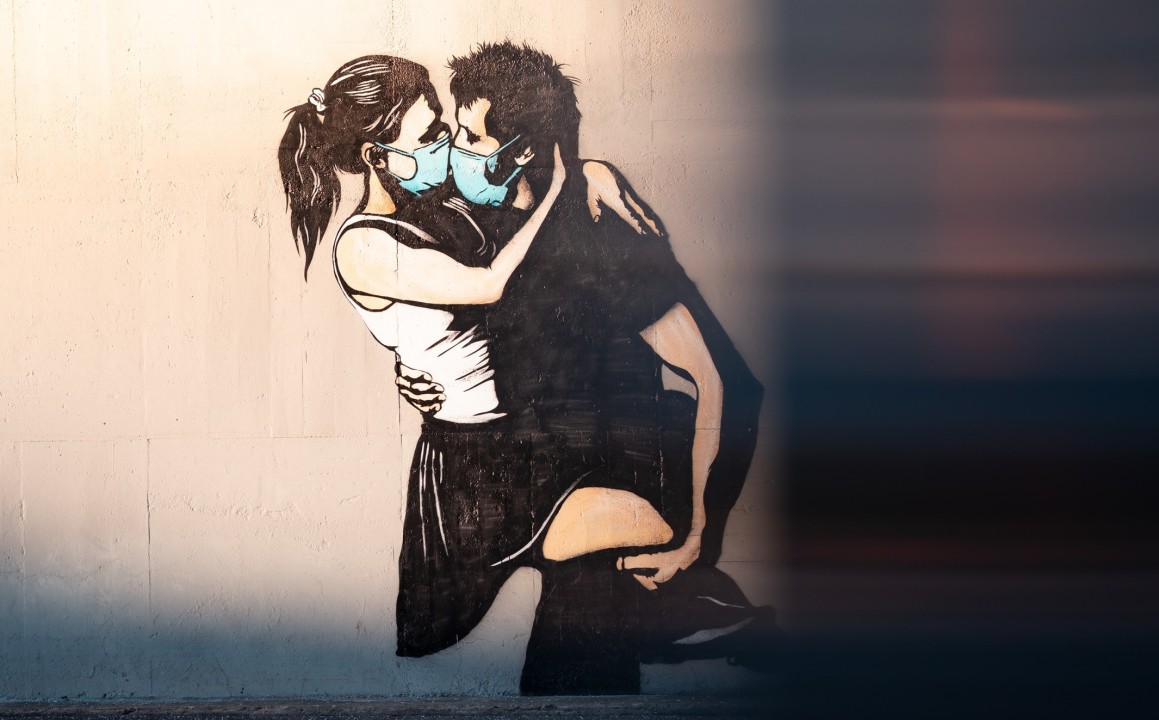
In March 2020, I wrote while borders were closing, factories were stopping and entire sectors were trying to understand a crisis that had moved faster than their planning cycles. At that moment, the central question was simple: what would the world look like after Covid-19?
Six years later, the answer is clearer. The pandemic did not create every weakness we observed. It made existing weaknesses visible. Supply chains had been optimized for cost but not always for continuity. Organizations had digitized selected processes without redesigning how authority, information and accountability moved. Many countries had treated essential capabilities as commodities that could always be sourced elsewhere. When the shock arrived, efficiency alone was not enough.
The enduring lesson is not that globalization failed. It is that interdependence without visibility, optionality and governance is fragile.
A crisis of connected systems
Covid-19 crossed health, mobility, industry, finance, education and public administration at the same time. That combination mattered. A factory closure did not remain a manufacturing problem. It became a logistics delay, a shortage for another company, a cash-flow problem for a supplier, a staffing issue for a client and eventually a social concern for a government.
This is how systemic risk behaves. It travels through interfaces.
Before 2020, many risk registers treated a pandemic as a remote external event. The probability appeared low, so the item received limited management attention. Yet probability is only one dimension of risk. The level of interconnection, the speed of propagation and the absence of substitutes can turn an unlikely event into a severe business discontinuity.
That is why resilience must be designed at the interfaces: between procurement and operations, headquarters and sites, public policy and private execution, technology and human behavior.
From lean operations to intelligent redundancy
For years, management excellence was often associated with reducing stock, consolidating suppliers and eliminating spare capacity. Those practices can improve performance in stable conditions. They can also remove the buffers that protect an organization when conditions change abruptly.
The lesson is not to abandon lean thinking. It is to distinguish waste from strategic redundancy.
A second supplier may look inefficient until the first one stops. Safety stock may look expensive until a critical component becomes unavailable. Local production may carry a higher unit cost while creating significant value through shorter lead times, better traceability and greater continuity.
Resilience therefore requires a portfolio logic. Not every item deserves duplication. Criticality, recoverability, lead time, geographic concentration and substitution options should determine where buffers are necessary. The correct question is not, "What is the cheapest operating model?" It is, "What operating model protects value across several plausible scenarios?"
Digital transformation is a governance project
The pandemic accelerated remote work, electronic commerce, digital payments and virtual collaboration. But the organizations that adapted best were not simply those with more software. They were those able to convert information into decisions quickly.
Technology can move data. It cannot automatically clarify who owns a risk, who has authority to act or what evidence is required before a decision. Those are governance questions.
A resilient digital operating model needs reliable data, clear decision rights, secure access, traceable workflows and teams trained to exercise judgment. It also needs a fallback when the digital chain fails. Cybersecurity, data sovereignty and continuity planning are now part of operational performance, not specialist topics left to an information technology department.
The same principle applies to artificial intelligence in 2026. AI can accelerate analysis, forecasting and scenario generation. It can also create false confidence if the underlying data are incomplete or if nobody remains accountable for the recommendation. Resilience means using AI to extend human capacity while preserving challenge, verification and responsibility.
Africa: vulnerability and strategic opportunity
In 2020, I was particularly concerned about Africa. Many economies were exposed to commodity cycles, imported medicines, imported manufactured goods and fragile logistics. The pandemic confirmed that external shocks can quickly affect prices, employment, access and public finances even when the initial event begins elsewhere.
But the African lesson is not limited to vulnerability. The continent also demonstrated adaptability through mobile payments, local production initiatives, community networks and new digital services. Constraints generated practical innovation.
The strategic opportunity now is to transform that adaptability into durable productive capacity. This means strengthening regional value chains, improving transport and energy infrastructure, developing pharmaceutical and agro-industrial capabilities, investing in digital public infrastructure and retaining more value locally.
Local capacity does not mean isolation. It means negotiating interdependence from a stronger position. A country or region that can produce selected essentials, process more of its own resources and connect entrepreneurs to reliable infrastructure is better equipped to participate in global markets.
The new performance equation
The post-Covid organization cannot measure performance only through quarterly cost and output. It must also understand exposure and recovery.
Useful questions include:
- Which process would stop first if a critical supplier, system or route became unavailable?
- How long could the organization operate before the interruption affected customers?
- Who has authority to activate an alternative?
- Which data are needed to make that decision?
- What capabilities must remain internal, even if outsourcing appears cheaper?
- How are employees, suppliers and communities protected during the transition?
These questions connect risk management to strategy. They force leaders to see resilience not as insurance, but as a capability that supports trust and long-term performance.
Building forward, not returning to normal
The desire to "return to normal" was understandable in 2020. Yet normality included many of the conditions that made the shock so disruptive. Returning without redesigning would have meant preserving the same vulnerabilities.
Building forward requires three commitments.
First, organizations must map critical dependencies and test them through realistic scenarios. A business continuity plan that has never been exercised is only a document.
Second, decision-making must move closer to useful information. Sites and operational teams need calibrated authority, escalation thresholds and clear communication channels.
Third, investment decisions must include resilience, social impact and environmental sustainability alongside financial return. A solution that is profitable only when every assumption remains stable is not truly robust.
Covid-19 reminded us that economies are human systems. Health, trust, competence and social cohesion influence production as surely as capital and technology do. The future belongs to organizations and countries capable of balancing efficiency with resilience, global connection with local capacity, and innovation with responsibility.
The question is no longer whether another shock will occur. The question is whether we will have designed our systems to learn, adapt and continue creating value when it does.